
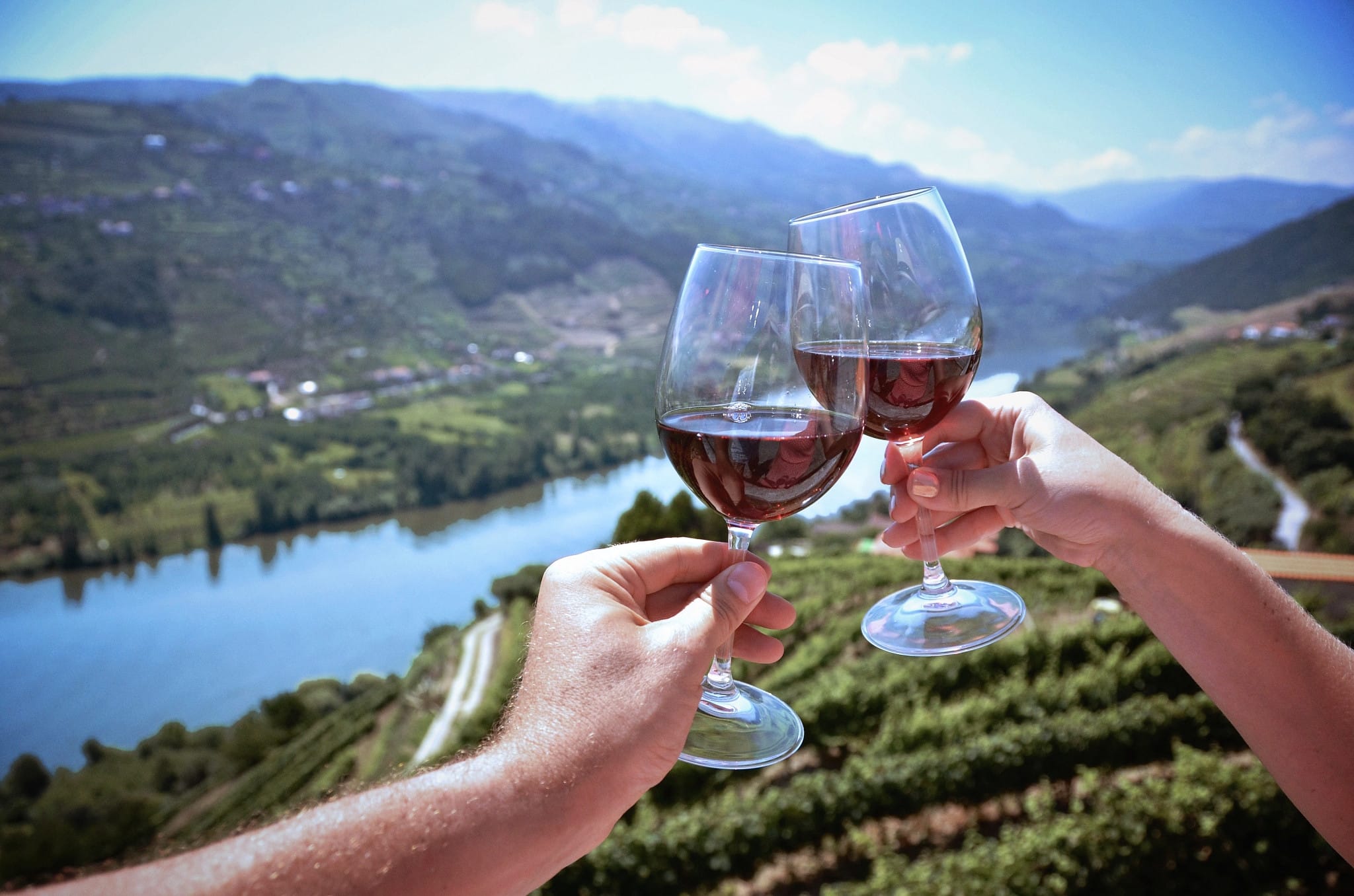
What to Know About Wine River Cruises in Europe
Yes, There May Be Wine Before Lunch
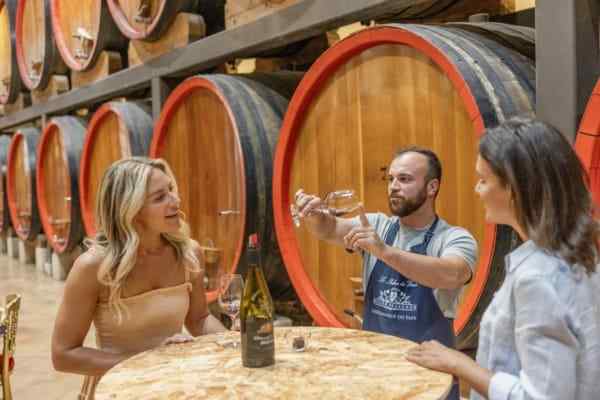
There are very few circumstances in adult life when someone can hand you a glass of wine at 11:00 in the morning and call it cultural enrichment. A wine river cruise is one of them.
You may find yourself standing in a centuries-old cellar in Bordeaux, walking between vines above the Douro, or tasting a crisp white in Austria’s Wachau Valley while someone explains what the soil, the slope and a particularly temperamental growing season had to do with what is now in your glass. Somewhere along the way, you realize it isn’t quite noon yet. No one seems remotely concerned.
The thing is, the wine was here long before the cruise ships were. These rivers run through landscapes shaped by vineyards, villages, local kitchens and generations of people who learned what grew well on a particular hillside. The wine isn’t an activity inserted into the itinerary. In many of these places, it is part of the reason the place looks, tastes and lives the way it does.
And despite the name, a wine river cruise does not require an encyclopedic knowledge of vintages or the ability to detect graphite in a Cabernet. Curiosity will do nicely.
So, What Exactly Is a Wine River Cruise?
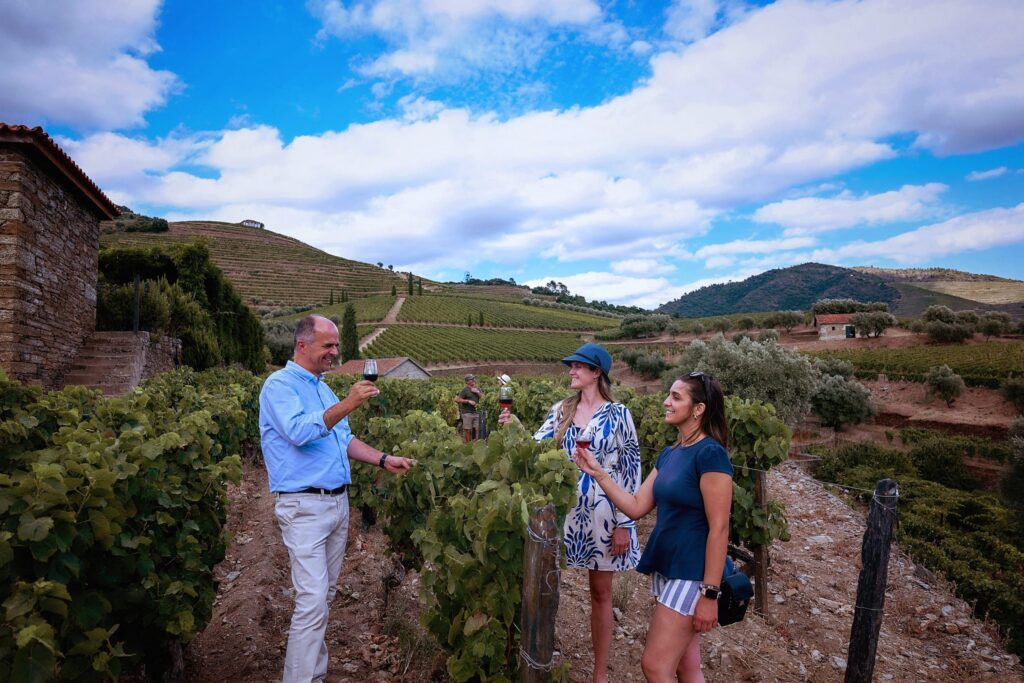
At its best, a wine river cruise is less about studying wine than about meeting it where it lives.
You might walk between rows of vines before tasting the wine they produce, descend into a château cellar in Bordeaux, or sit down to a pairing dinner after spending the afternoon watching vineyards pass your window.
Some sailings are devoted specifically to wine, with tastings, expert-led conversations and pairings woven throughout the journey. Others make wine part of a broader exploration of the region, with vineyard visits, cellar tastings and encounters with local producers along the way. How much wine becomes part of the trip depends on the particular sailing.
The distinction matters when choosing a trip, and we’ll get to that. But the appeal is wonderfully simple: instead of ordering a bottle from a wine list and reading where it came from, you get to go there.
You Do Not Need to Know Anything About Wine
There is no quiz at the gangway.
You do not need to know your left bank from your right, understand why one hill side produces a celebrated Riesling while the next produces something perfectly pleasant, or have strong opinions about oak. You can simply know that you like the one in your glass.
In fact, one of the pleasures of a wine river cruise is discovering things in context. A grape variety that meant very little to you at home becomes considerably more interesting after you have walked through the vineyard where it grows, met the person who makes the wine and tasted it with the food people have been eating alongside it for generations. The education happens almost accidentally.
Wine may be the theme, but it doesn’t have to be everyone’s hobby. These are still European river cruises, with historic towns, markets, architecture, food and the simple pleasure of watching the landscape change from the deck. One person can happily debate vintages while the other concentrates on the view and the cheese. And for those who do partake, there is one particularly civilized feature of tasting your way through Europe by river: nobody has to drive home.
Why Wine and River Cruising Work So Well Together
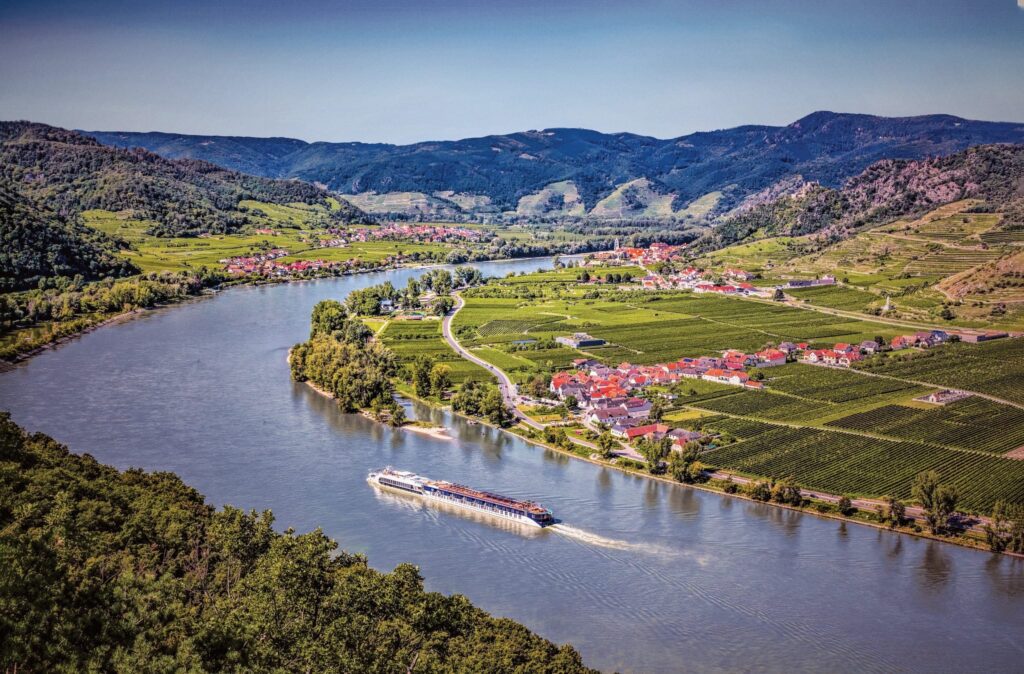
Europe’s great wine regions and its rivers have been keeping company for centuries.
Long before anyone thought to put a balcony cabin on the Danube, these rivers were the highways of Europe. Wine traveled on them, towns prospered beside them, and vineyards took hold on the hillsides above them. Over centuries, differences in sun, slope, soil and climate gave those places wines of their own – and names that eventually became familiar far beyond the riverbanks where they began.
This is what makes a wine river cruise different from simply scheduling several tastings on a vacation. You are traveling through the geography that produced what is in your glass. By dinner, the name on the bottle is no longer just a name. You know where it lives.
Where Should You Go?
Bordeaux
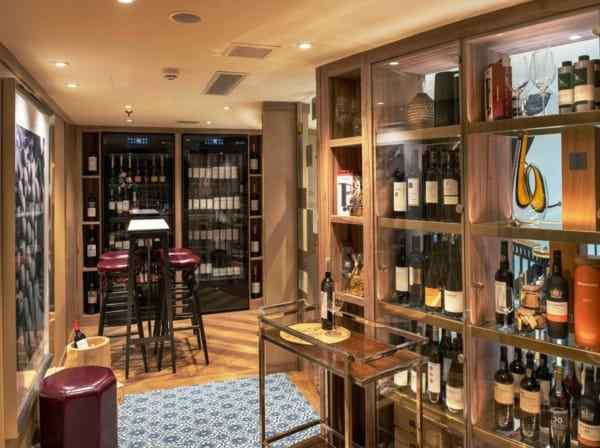
If red wine is your natural habitat, Bordeaux makes a persuasive case. Cabernet Sauvignon is particularly associated with the gravelly soils of the Left Bank, while Merlot plays a starring role elsewhere in Bordeaux. This is a place where words you have seen on wine lists – Médoc, Margaux, Saint-Émilion – suddenly become actual places. Bordeaux is not exclusively red, either. Sauvignon Blanc and Sémillon appear in its whites, while Sauternes turns Sémillon and its partners into gloriously complex sweet wines, thanks in part to botrytis, or noble rot. It is difficult not to become at least slightly more interested in wine here.
The Rhône and Saône
This is wine country with an appetite. Burgundy is the great territory of Pinot Noir and Chardonnay, two grapes capable of tasting remarkably different depending on precisely where they are grown. Continue south and the vocabulary changes: Syrah dominates the reds of the Northern Rhône, while Grenache becomes increasingly important in the south, often joined by Syrah and Mourvèdre in blends. This is also a landscape of markets, cheeses, charcuterie and the sort of lunches that make an afternoon appointment seem unnecessarily ambitious.
The Douro
Port made Portugal’s Douro Valley famous, but it is only part of the story. The Douro also produces dry wines from indigenous grapes including Touriga Nacional, Touriga Franca and Tinta Roriz. A visit to a quinta, or wine estate, puts those unfamiliar names into context remarkably quickly. Taste the wine where the grapes were grown and suddenly memorizing grape varieties seems beside the point.
The Moselle and Rhine
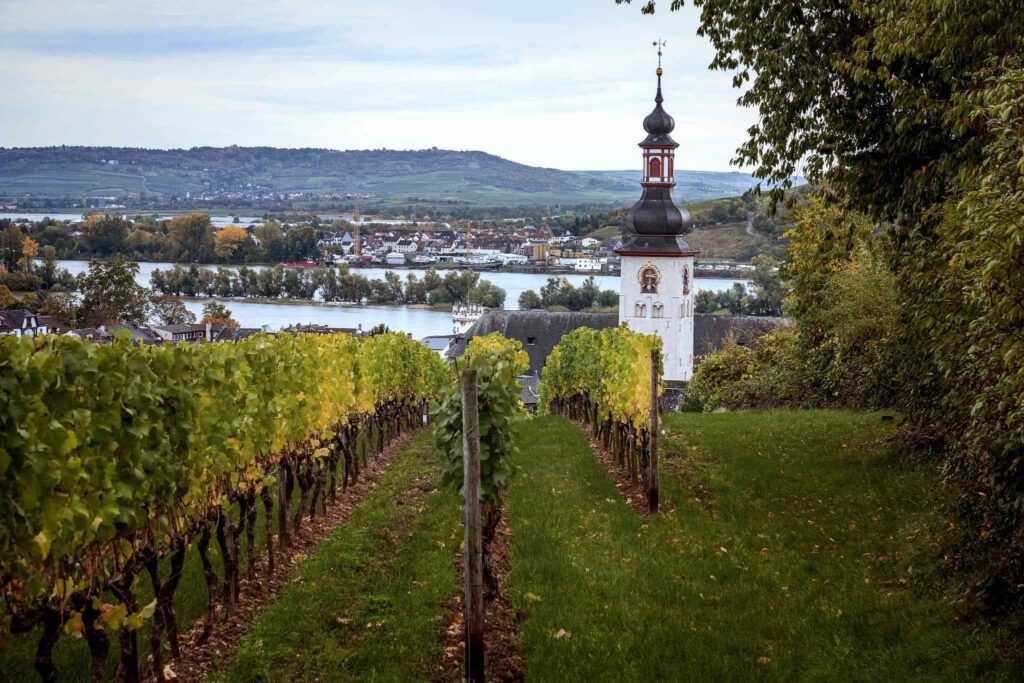
Here, Riesling gets its moment. Its range is far greater than its old reputation as simply ‘sweet wine’ suggests, from dry, taut wines to richer and sweeter styles. This is one of the pleasures of tasting wine in its home territory: familiar names become considerably more complicated – and considerably more interesting.
The Danube and Wachau Valley
Austria’s Wachau Valley gives you Grüner Veltliner and Riesling, but grapes do not have the region entirely to themselves. The Wachau is also famous for its apricots – Wachauer Marille – which find their way into preserves, pastries, dumplings and spirits. Encounter an apricot dumpling somewhere along the way and consider it research.
There is no universally ‘best’ river for a wine cruise. Bordeaux is not the Douro, and the Wachau is certainly not Burgundy. That is precisely the point. Choose the landscape and flavors that make you want to pack a bag; the wine will introduce itself when you arrive.
What Does a Wine-Focused Day Actually Look Like?

You wake up somewhere new, which is one of river cruising’s better tricks. While you were sleeping, your hotel moved.
After breakfast, you might head into the vineyards for a walk and tasting, visit a family-owned winery or disappear into a cellar where someone who knows considerably more about wine than you do explains what you are about to drink. Then comes the useful part: you taste it. Depending on the itinerary, there may be a private vineyard visit, a wine-paired meal, time with a local producer or a tasting devoted to the particular wines of the region.
By afternoon, you could be back aboard or wandering through a village with absolutely no wine-related objective whatsoever. That matters. A good wine-focused river cruise leaves room for Europe.
Then there is dinner. Perhaps a wine you encountered earlier appears beside something local on the plate, and the connection between place, food and glass becomes a little clearer. You have learned something without spending the day in a classroom.
And when dinner is over, your hotel is waiting downstairs.
Come for the Wine. Stay for Everything Else.
The secret of a really good wine itinerary is that the wine is only part of the seduction. Europe’s great wine regions also happen to contain some of its loveliest landscapes and most distinctive food cultures.
Burgundy & Provence
AmaWaterways’ Essence of Burgundy & Provence Celebration of Wine sailings travel the Saône and Rhône through a particularly tempting stretch of France. Between tastings are vineyard-covered hills, old villages, Provençal markets and a food culture where cheese, charcuterie, olive oil and whatever is in season are taken quite seriously. This is not the itinerary on which to begin a diet.
Bordeaux
Uniworld’s Brilliant Bordeaux explores the Garonne, Dordogne and Gironde through Médoc, Cadillac, Blaye and Libourne, putting some of the world’s most recognizable wine country outside the window. But Bordeaux is also southwest France: oysters from the nearby Atlantic, cheeses, markets and the rich cooking of the region. And then there is Sauternes, which makes a persuasive argument for saving room after dinner.
The Douro Valley
AmaWaterways’ Enticing Douro travels through the terraced wine country of northern Portugal, where vineyards rise so dramatically from the river that the landscape itself feels like part of the itinerary. Portugal contributes its own considerable pleasures to the arrangement: olive oil, cheeses, cured meats, rustic regional dishes and, inevitably, something sweet with coffee. You could come here knowing nothing about Port and still leave rather attached to the Douro.
The Rhine & Moselle
AmaWaterways’ Rhine & Moselle Splendors Celebration of Wine departures pair dedicated wine programming with one of Europe’s most improbable vineyard landscapes. Vines climb slopes above the Moselle at angles that appear to defy both gravity and sensible agricultural planning. Below them sit half-timbered villages; castles appear on the hillsides. Even before the first tasting, the scenery has made a fairly convincing sales pitch.
The Danube & Wachau
Uniworld’s Vineyards & Palaces Along the Danube combines Austrian wine country with the considerable architectural ambitions of Central Europe. Terraced vineyards, apricot orchards and medieval villages line the river before Vienna adds coffeehouses, pastries and imperial grandeur to the equation. Wine may have brought you here, but an apricot dumpling and a Viennese café can be remarkably persuasive reasons to linger.
These are not interchangeable trips, nor should they be. Some departures make wine an organizing theme; others simply travel exceptionally well through wine country. The pleasure is choosing the version of Europe you most want to taste – and discovering that what surrounds the glass may be every bit as memorable as what is in it.
Who Is a Wine River Cruise Really For?
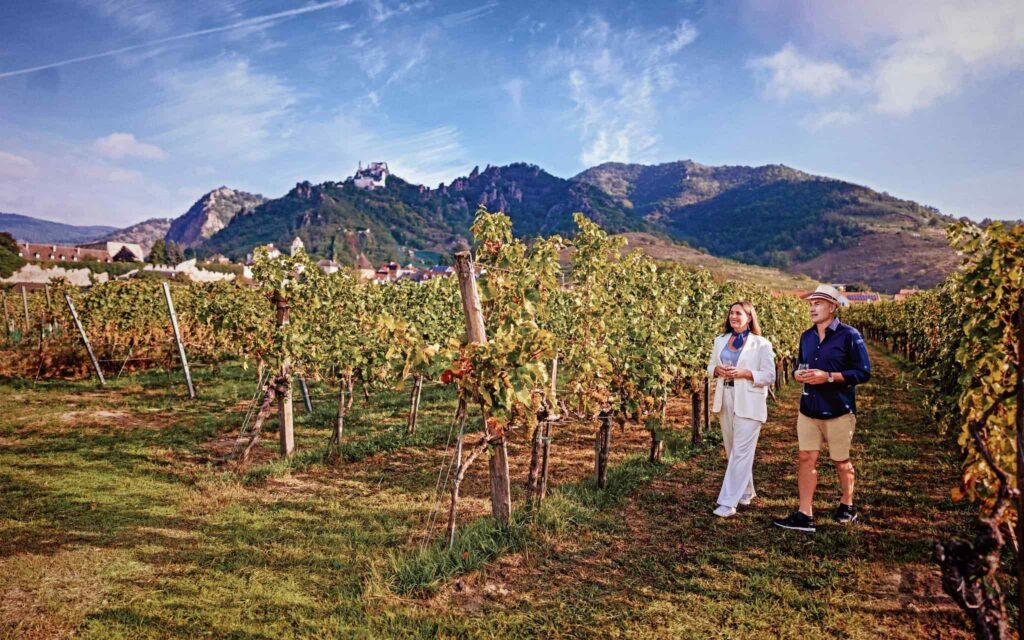
Obviously, people who love wine have a head start. But some of the best candidates are simply people who choose their travels according to what they like to eat, drink and discover when they get there.
A wine river cruise works particularly well for couples whose enthusiasm for wine is not perfectly matched, groups of friends who would rather linger over a long table together than rush through dinner, and travelers who like having a theme without surrendering the rest of the destination to it.
They are also unusually well suited to wine clubs, winery communities and groups formed around a favorite local wine shop. There is something appealing about taking the conversations that normally happen around a tasting table and moving them to Bordeaux, Burgundy or the banks of the Douro.
You already know you enjoy drinking wine together. It turns out traveling through it together is even more fun.
The Wine Tastes Different Here
Perhaps it is the setting. Perhaps it is having met the person who made it, walked through the vineyard where the grapes grew or learned why that particular hillside matters.
Whatever the reason, a bottle opened at home can tell you where it came from. A wine river cruise lets you understand what that place actually means.
And once you have tasted a crisp Grüner Veltliner overlooking the Wachau, a Riesling beneath the steep slopes of the Moselle or a red surrounded by the vineyards of Bordeaux, the label on the bottle will never look quite the same again.
Curious which wine river cruise fits your taste? I can help you find the right river, region and sailing.
EXPLORE WINE RIVER CRUISES
Until next time.


